1. Arasteh, H.R. (2008). Globalization and higher education in a changing world. Rahyaft Journal, (42) (in Persian).
2. Bendriss, R. (2007). Internationalization efforts at state universities in Florida. (Doctoral dissertation). The University of Central Florida, Orlando, Florida Retrieved from ProQuest Dissertations & Theses database. (UMI No. 3377799).
3. CARICOM (2002). The statistics sub-programme information and communication programme Caribbean community (caricom) secretariat. Georgetown: CARICOM Secretariat.
4. Childress, L.K. (2009). Internationalization Plans for Higher Education Institutions. Journal of Studies in International Education.13
5. Cottier, T. (2006). From progressive liberalization to progressive regulation in WTO law. Journal of International Economic Law, 10.
6. Dabirimer, A. (2006). Globalization and national development. Rahbord Yas, (4) (in Persian).
7. Donya-e-eqtesad (2011). Personal and social benefits of investment in higher education. Donya-e-eqtesad Dilly, No. 3206 (2 December 2012) (in Persian).
8. Horn, H. (2004). National treatment in the GATT/WTO. Stockholm: Institute for International Economic Studies.
9. Kamjo Jalili, S.P. (2012). Purposivism importance of public education subsidies. Donya-e-eqtesad Dilly, No. 2646, 21 May 2012, (in Persian).
10. Knight, J. N. (2004). Internationalization remodeled: Definitions, approaches, and rationales. Journal of Studies in International Education.
11. Knight, J. N. (2006). Cross border education: An analytical framework for program.
12. Naderi, A., & Esmailiniya, N. (2011, April). Internationalization of higher education and academic quality improvement. 5th Conference on Quality Assessment in University System, 27 April 2011. Tehran, Iran (in Persian).
13. OECD (2007). Science technology industry business and industry policy forum series: The service economy. Paris: OECD Publication.
14. Okunuga, O. A., Opara, A.I., & Iyiegbuniwe, J. C. (2013). Effect of globalization on higher education: WTO/GATS and cross-border provision of higher education in Nigeria. IOSR Journal of Mathematics (IOSR-JM.). 7(2).
15. Pakdaman, R. (2000). Special treatment of developing countries in the WTO. Tehran: Institute for Trade Studies and Research (in Persian).
16. Rabiee, A., & Nazariyan, Z. (2012). Barriers to privatization of higher education in providing solutions to fix them. Iranian Higher Education. No.15 (in Persian).
17. Rezghi Shirsavar, H., & Pirayanndeh, P. (2011). Assessment of Iran higher education in the process of globalization. Strategic Study of Globalization Journal, 2(5) (In Persian).
18. Saadati, S. Z. (2013). Trade in higher education service in world trade organization (WTO). (Thesis Master). Faculty of Law, the University of Qom (in Persian).
19. Sabaghyan, A. (2007). Familiarity with the world trade organization (WTO). Hamshahrionline, May 5(in Persian).
20. The WTO and the Millennium Development Goals (2014). Retrieved from http://www.wto.org/english/thewto_e/coher_e/mdg_e/mdg_e.htm.
21. Teymuri, S. (2013). An assessment on the globalization center managers and experts viewpoints on cultural-educational challenges facing education & training in the world. Strategic Study of Globalization Journal, 4(11) (in Persian).
22. Tilak, J.B.G. (2011). Trade in higher education: The role of the general agreement on trade in services (GATS). Paris: UNESCO.
23. Toffler, A. (1981). The third wave. London: Pan Books Ltd.
24. UK Higher Education International Unit (2013). International higher education in facts and figures. London: UK Higher Education International Unit.
25. Vaezi, M., & Ghoronyeh, D. (2011). Culture, globalization and higher education. Barge Farhangh, (21) (in Persian).
26. Vik, A. (2006). Higher education and gats regulatory consequences and stakeholders' responses. CHEPS/UT.
27. Zolghadr, H., & Ghasemzade Araghi, M. (2014). Social networks, exhibitive of global village. Culture and Communication, 2(8) (in Persian).
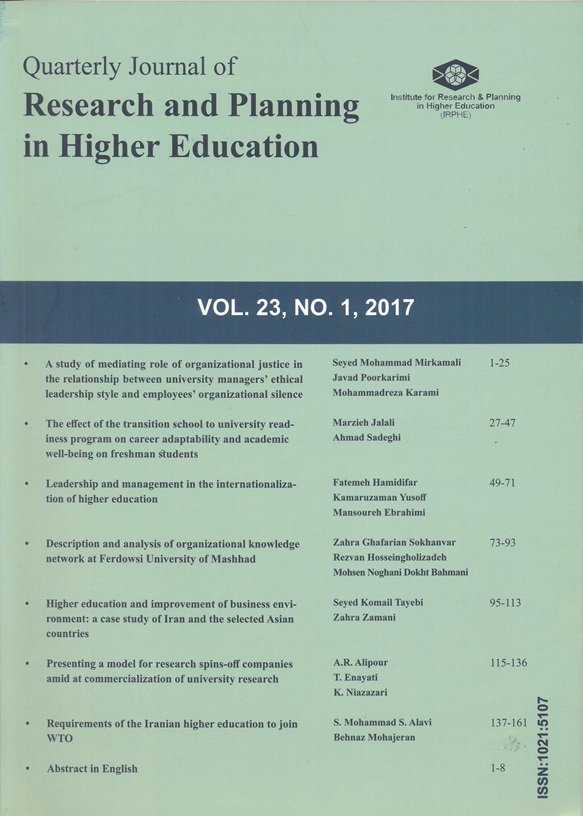
 Quarterly Journal of Research and Planning in Higher Education